
How Northwest Ohio Homeowners Are Getting More Out of Their Outdoor Spaces This Summer

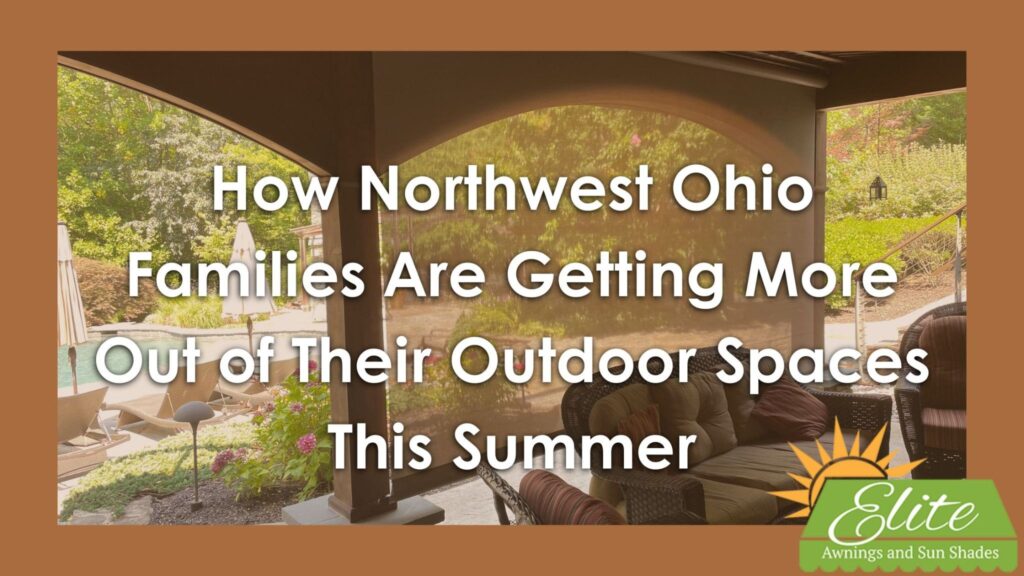
Summer arrives on its own schedule in Northwest Ohio. The days get long, the yards turn green, and suddenly the patio that sat quiet all winter is the most appealing room in the house — at least until two in the afternoon, when the sun takes over and everybody retreats back inside. For a lot of families across the Toledo region and into Southeast Michigan, that pattern repeats itself every year without a real solution in sight.
Retractable screens change that equation. They don’t just address one thing; they address the whole range of reasons a covered patio or outdoor living space becomes uncomfortable in summer. Heat. Glare. Bugs. The feeling of being too exposed to the street or a neighbor’s yard. A quality motorized screen handles all of these, and it does it without permanently enclosing a space or changing how the home looks from the outside.
This is a practical guide to understanding how retractable screens and sun shades work, what to look for when choosing one, and how families across Northwest Ohio are using them to get genuinely comfortable outdoor use out of their homes from late spring through early fall.
Why Heat Is the Problem Most People Underestimate
Most homeowners think of bugs or privacy first when they consider screening in a patio. Those are real concerns, but heat is usually the thing that actually drives the decision. A covered porch that stays shaded is comfortable until the sun shifts. A patio facing west or south can be unusable by midday in July, even with a ceiling fan running. In the Toledo area, July and August regularly push into the upper 80s and low 90s, and radiant heat from direct sun exposure makes outdoor spaces feel significantly warmer than the ambient temperature suggests.
Solar mesh screens address this directly. The fabric works by intercepting solar radiation before it reaches the space below. Depending on the openness factor of the mesh — typically ranging from 65% to 90% solar blockage in quality residential installations — a screen can meaningfully reduce the amount of radiant heat entering a patio area while still allowing airflow to pass through. That combination is what separates a screened patio from an enclosed one. The space stays shaded and cooler without feeling sealed off.
The Sunesta Sentry power retractable screen, which is what Elite Awnings installs and services throughout Northwest Ohio and Southeast Michigan, is motorized and built to custom dimensions up to 18 feet wide and 12 feet tall. The zipper-track design keeps the fabric taut across its full span, which matters both for consistent solar performance and for handling the kind of afternoon breezes that pick up regularly in this region.
The Fabric Matters More Than Most People Realize
Choosing the right screen fabric is where the real decision-making happens. The options available through Elite Awnings’ Sunesta product line fall into a few categories, each suited to a different set of priorities:
- Solar mesh blocks a meaningful percentage of UV radiation and radiant heat while preserving airflow and outward visibility. This is the most common choice for families prioritizing comfort and a connection to the yard.
- Insect mesh uses a tighter weave designed specifically to keep bugs out. It allows good airflow while handling the mosquitoes and gnats that peak in Ohio summers, particularly near wooded areas or drainage.
- Opaque fabric provides complete privacy and maximum light control. It works well for patios facing a street, sidewalk, or neighboring property with a direct sightline.
- Semi-transparent options strike a balance between solar control and outward visibility, making them a practical all-around choice when privacy and heat reduction are both priorities.
The openness factor of a solar mesh — how tightly or loosely it’s woven — determines how much solar energy it intercepts. A tighter weave blocks more heat and UV. A more open weave allows more light and visibility. A shade specialist from Elite Awnings can walk through which openness level makes sense for a specific patio’s orientation, sun exposure, and how the family actually uses the space.
Airflow As Part of the Equation
One of the consistent complaints about fixed patio enclosures is that they trap heat. Glass or solid panels block the sun, but they also stop the breeze, and a screened-in porch with no air movement can feel worse than sitting in the open sun. This is where motorized solar mesh screens have a clear functional advantage.
Solar mesh is an engineered fabric that allows air to circulate through the weave while intercepting radiant energy. The result is shade without stagnation. On a day when a light breeze is moving across the yard, a screened patio using solar mesh will feel noticeably cooler than the same space enclosed in solid material, and often cooler than the open patio would feel under direct sun.
Families who use their outdoor spaces regularly — for meals, for kids playing, for evening gatherings — tend to value this distinction once they experience it. The screen doesn’t change the outdoor character of the space. It adjusts one specific variable: how much direct solar energy is hitting the people in it.
Thinking about adding a retractable screen to your patio before summer gets underway? Request a free in-home estimate from Elite Awnings and find out which system fits your space. We serve homeowners throughout Northwest Ohio and Southeast Michigan.
Bugs, Privacy, and the Other Reasons Screens Make Sense
Comfort is the primary driver, but it rarely travels alone. Most families dealing with a hot afternoon patio are also dealing with mosquitoes by evening and a sense that the space doesn’t feel quite private enough for regular use.
Insect pressure for Northwest Ohio homeowners peaks from late May through August. Areas near standing water, drainage fields, or wooded borders deal with mosquitoes earlier and longer than more open suburban lots. A retractable insect screen keeps the mesh taut enough to block common pests while retracting fully when the family wants an unobstructed space for a gathering or wants to open the patio back up on a cool evening.
Privacy is a more subjective consideration, but it’s a meaningful one. A patio that faces a sidewalk or sits close to a neighboring property often gets used less than it otherwise would, simply because it doesn’t feel like a personal space. Solar mesh and opaque fabric privacy screens both reduce visibility into the patio from the outside without creating a sense of enclosure from within. Families consistently report that this shift, modest as it sounds, changes how often they actually use the space.
What the Installation Process Looks Like
Sunesta retractable screens are custom-built to order, which means the dimensions, fabric selection, frame color, and operating system are all specified for the exact space where the screen will be installed. Manufacturing typically takes around two weeks from order placement. Installation itself generally runs three to four hours on average for a standard residential screen.
Elite Awnings handles the full process: the in-home estimate, the order, and the installation. There’s no subcontracting. The team that gives you the estimate is connected to the team that shows up to install. For homeowners who’ve had poor experiences with home improvement projects where the sales process and the execution feel disconnected, this matters.
Every installation begins with a free in-home estimate where a specialist looks at the actual space. Patio dimensions, mounting surface material, the height and angle of the opening, sun orientation — all of these inform which system and fabric make sense. A conversation about how the family uses the patio, what times of day they’re out there, and what’s bothering them most about the current setup helps narrow the fabric and opacity decision.
The Sunesta sun shades and screens that Elite Awnings installs are manufactured in Jacksonville, Florida, backed by a comprehensive warranty, and designed to hold up through multiple Ohio seasons. Motorized operation puts the screen on a remote or wall switch, so extending and retracting it requires no physical effort and takes seconds.

Timing the Decision Right
Spring is when families make these decisions, and there’s a practical reason to move early. Sunesta systems are built to order, and the weeks leading into Memorial Day and the early part of June are when the installation calendar fills up fastest. Families who get their estimate in April or May are typically installed and using their screen well before the hottest stretch of summer. Those who wait until July often find themselves scheduling into August.
Beyond timing, the case for acting before the season starts is straightforward: every week a patio sits in direct sun that you’re not using is a week of your outdoor season you don’t get back.
Elite Awnings serves homeowners across a broad service area including Toledo, Findlay, Ann Arbor, and throughout the surrounding Ohio counties and Southeast Michigan. A free in-home estimate is a practical first step for any homeowner trying to figure out whether a retractable screen is the right solution for their specific patio, or whether a retractable awning or a combination approach makes more sense.
Ready to get started? Request your free estimate from Elite Awnings or call us at 419-343-1993. Summer installation spots fill up fast across Northwest Ohio and Southeast Michigan.