
How Much Can Awnings Save on Your Ohio Energy Bills? Real Numbers for Real Homes

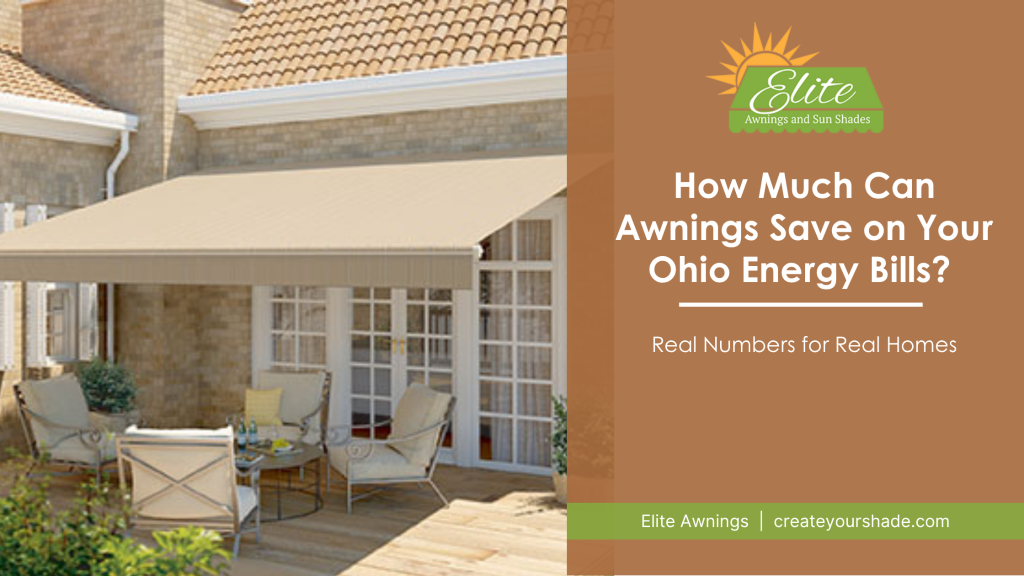
Summer in Northwest Ohio comes with a familiar problem: you want to be outside, but your air conditioner is working overtime to keep the inside tolerable. If your electricity bill has been climbing through June, July, and August, part of the answer for energy savings might be standing right in front of you — literally. The windows in your home could be driving more of your cooling costs than you realize.
Here’s the number from the Department of Energy: about 76% of sunlight that hits standard double-pane windows enters your home as heat. Windows are responsible for 25 to 30 percent of residential cooling energy use. That means a meaningful portion of every dollar you pay to cool your home in the summer is coming straight through the glass.
A retractable awning addresses that problem at its source — before the heat ever enters your home. And the difference shows up in real, measurable ways.
What’s Happening at Your Windows
Interior blinds and curtains are useful, but they have a fundamental limitation: by the time sunlight has passed through your windows and hit those shades, a significant share of it has already become heat inside your home. Interior treatments diffuse light. They don’t stop heat gain.
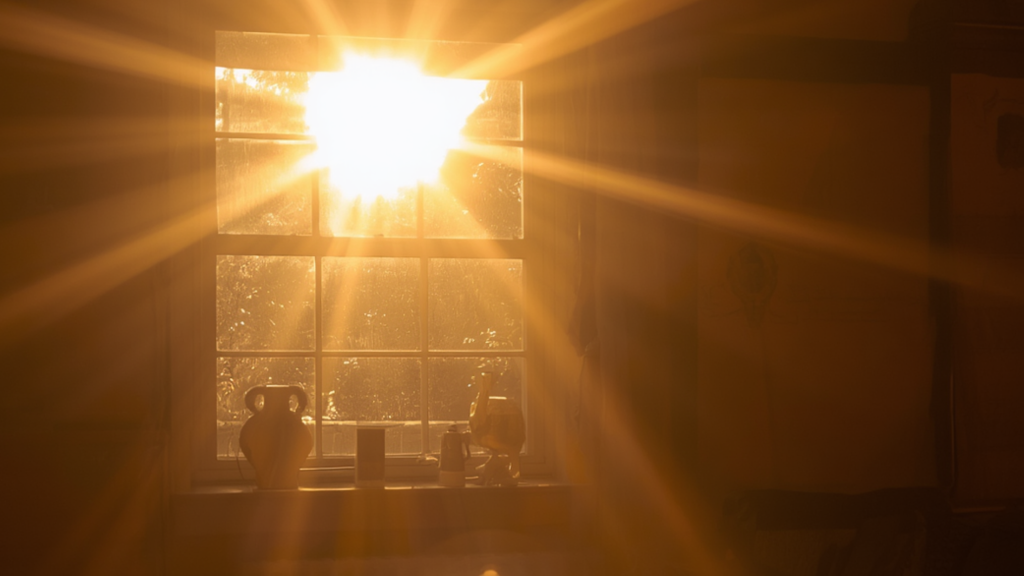
An exterior awning intercepts sunlight before it reaches the glass. That’s why it’s substantially more effective at reducing indoor heat buildup than anything installed on the inside. According to DOE research, window awnings can improve solar heat gain reduction by up to 65% on south-facing windows and up to 77% on west-facing windows.
Those aren’t small numbers. On a July afternoon in Toledo, when west-facing windows are catching hours of direct sun, an awning over those exposures can block nearly three-quarters of the solar heat gain that would otherwise load your cooling system.
Running the Numbers for Ohio Homes
Ohio’s average residential electricity rate was approximately 18.78 cents per kilowatt-hour as of early 2026, according to the U.S. Energy Information Administration — and that number has been trending upward. Every degree your air conditioner has to work against adds up.
Here’s a practical way to frame the savings. If your July electricity bill runs around $150, and roughly 25–30% of your cooling load is coming from window heat gain, that’s $37–$45 of your monthly bill tied directly to your windows. Shade your south- and west-facing windows with a retractable awning and you could cut that portion by more than half — consistently, every summer, for the life of the awning.
Your actual savings will depend on how many windows you’re shading, which direction they face, and how consistently you use the awning. But the mechanism is well-documented, and the math works in your favor.
Why Retractable Makes More Sense for Ohio Than Fixed
Ohio homeowners have a different seasonal calculation than homeowners in the South. You want shade in July. You want sun in January. A fixed awning shades your windows year-round — which means it works against you in the cooler months when solar heat gain is actually welcome.
A retractable awning gives you both. Extend it through the summer when you want to block heat and cool your home more efficiently. Retract it in the fall and let the sun do some of the heating work for you. You get the energy savings benefit in both directions.
A motorized Sunesta retractable awning makes this easier to manage day to day. A press of the remote extends or retracts the canopy in seconds. Wind sensor add-ons retract the awning automatically when conditions change — whether you’re home or not. When operation is effortless, you use the awning the way it’s designed to be used, rather than leaving it in one position out of convenience.
The Fabric Matters Too
Awning fabric affects how much heat gets blocked, not just how the awning looks. Lighter-colored fabrics reflect more solar radiation. Sunesta’s designer fabrics are also endorsed by the Skin Cancer Foundation specifically for their UV protection — which means anyone near those windows or sitting on your patio is benefiting from verified UV blocking, not just shade.
Elite Awnings & Sun Shades carries 100+ Sunesta fabric options. If energy savings and performance is a priority, that conversation starts during the in-home estimate when we look at your specific window exposure and talk through the fabric characteristics that will work best for your setup.
Built to Deliver That Performance for Years
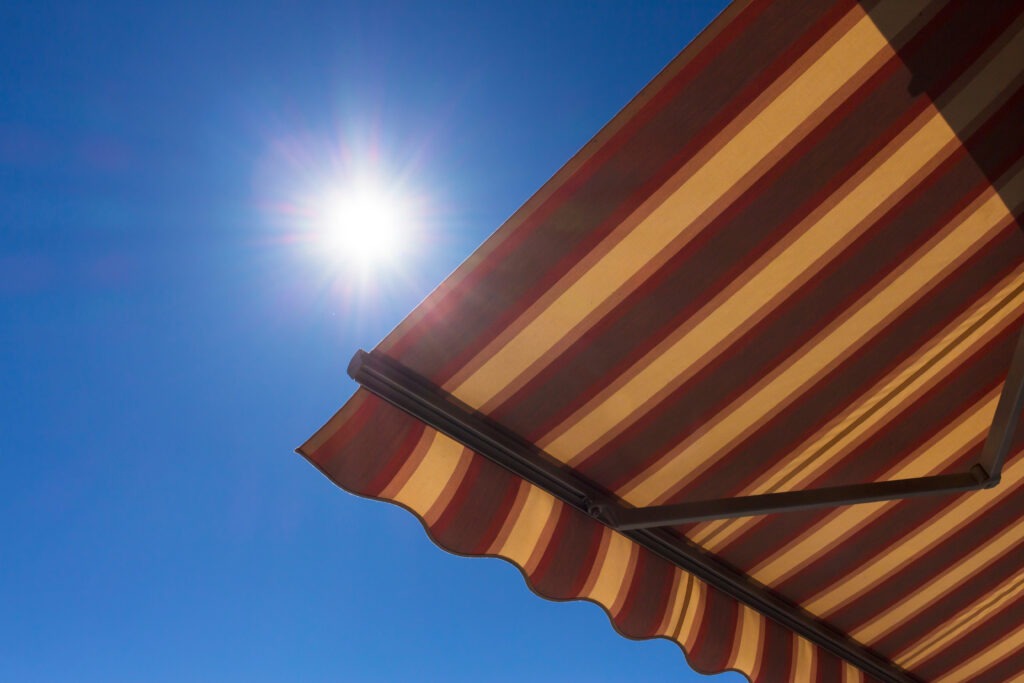
An awning only contributes to energy savings if it holds up season after season. Sunesta retractable awnings are built and assembled in Jacksonville, Florida — the only retractable awning in the United States with Miami/Dade County Building Code approval for high velocity winds. The frame carries a lifetime warranty that transfers to the next homeowner, which means the investment protects your home’s value even if you sell. The fabric carries a 10-year warranty. Competitors typically offer 5-year warranties across the board.
We’ve served homeowners throughout Toledo, Sylvania, Perrysburg, Maumee, Findlay, and communities across Northwest Ohio and Southeast Michigan. We’ve been recognized as a Sunesta Top 10 Dealer in the US and Canada for five consecutive years, and we stand behind what we install.
Get a Free In-Home Estimate
If you’re watching summer electricity bills climb and want to understand what shading your south- or west-facing windows can actually do, the best next step is a free in-home estimate. We’ll come to your home, look at your windows and patio, and walk you through what’s realistic for your specific space.
Request your free in-home estimate at or call us at (419) 343-1993. No obligation, no pressure — just an honest conversation about what’s possible for your home.