Choosing Awning Fabric: Color, Pattern, and Protection

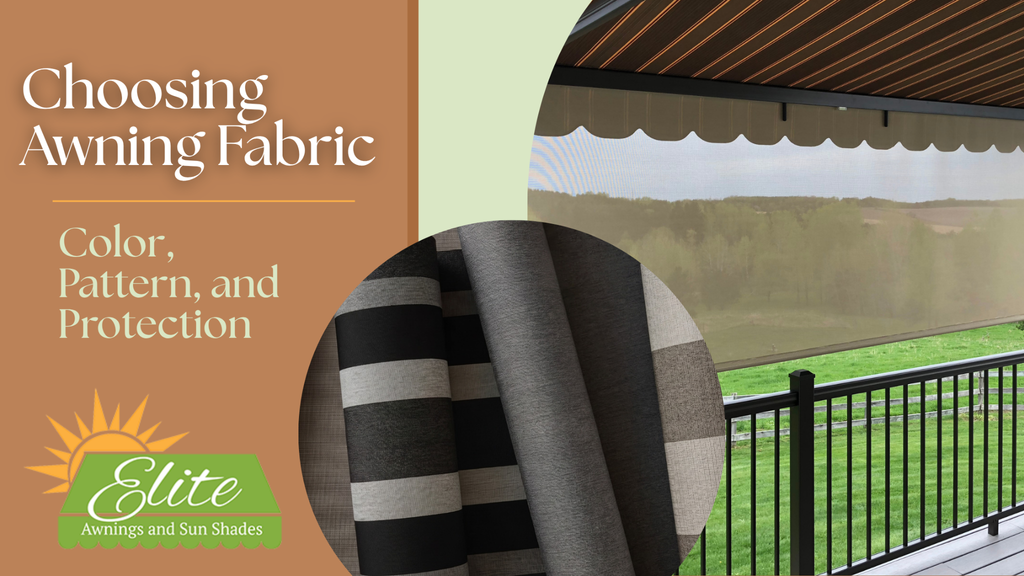
Ask anyone who’s been through an awning project which part they enjoyed most, and it’s this one. Not the measuring. Not the paperwork. The afternoon with the fabric samples spread across the kitchen table.
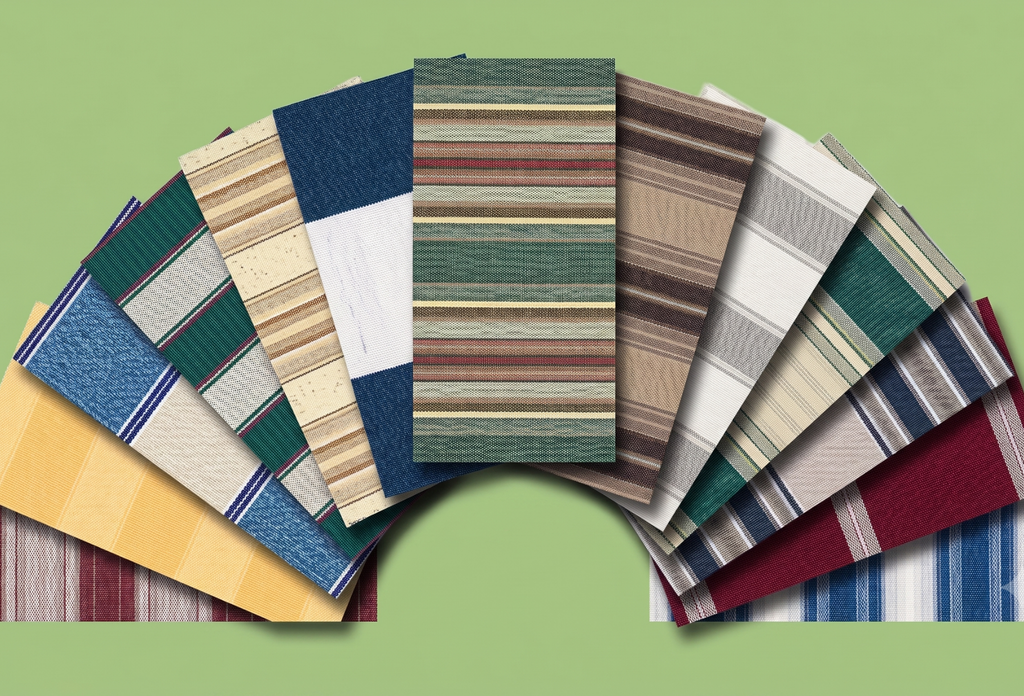
With 100+ awning fabric options to choose from, it’s also the part that takes the longest, which is a good argument for doing it now rather than in a hurry next May.
Here’s how to narrow it down.
Start With the House, Not the Fabric
The most common mistake is picking an awning fabric you love in isolation and then discovering it argues with your siding.
Work the other way around. Look at what’s already fixed: siding color, roof color, trim, brick or stone if you have it, the frame color you’re leaning toward. There are 4 frame colors to work with, and the fabric has to live alongside all of it for years.
A good rule of thumb: pull a color the house already has rather than adding a new one to the mix. Trim, shutters, front door, the mortar in the brick. Something already there.
This matters more on some streets than others. The older neighborhoods around Toledo and Sylvania tend toward brick and strong trim, which narrows the field usefully. Newer builds out toward Perrysburg and Maumee often have a flatter, more neutral elevation that will take almost anything, which sounds easier and is actually harder.
Then Think About What the Awning Does to the Light
This one surprises people. Awning fabric doesn’t just block sun, it colors the light underneath it, and you’ll be sitting in that light all summer.
Deeper colors give you a cooler, more shaded feeling underneath, with a stronger cast to the light. Lighter fabrics feel brighter and airier below but can look washed out against a pale house. Stripes break up a large expanse and read a little more traditional. Solids recede and let the patio furniture do the talking.
If you’re not sure, the honest answer is that this is exactly what the samples are for. Hold them up on the actual wall, in the actual afternoon light, on your own house. Photographs and screens lie about color. Siding in October daylight does not.
Solid or Pattern? A Practical Way to Decide
Two questions usually settle it.
How big is the awning? A wide awning is a lot of one color. Patterns and stripes carry a large span more comfortably than a single flat field does.
How busy is the house already? Multi-tone brick, strong trim, and a lot of architectural detail all favor a quieter solid. A simple, plain elevation can take a bolder fabric and benefit from it.
If you’re still split after that, go and look at the awning on your own street. Northwest Ohio has enough of them up now that you can usually find both options within a few blocks, and seeing one at full size settles more arguments than a swatch ever will.
What’s Actually in the Fabric
Color is the fun part, but there’s a reason we talk about the awning fabric itself.
Sunesta’s designer fabrics are endorsed by the Skin Cancer Foundation, which matters if the whole point of the awning is spending more afternoons outside with the family. The fabric carries a 10-year warranty. The frame it hangs on carries a lifetime frame warranty that transfers to the next homeowner if you sell the house.
That’s a different proposition from the lesser quality awnings you’ll see advertised, many of them built overseas, and it’s worth knowing which one you’re comparing when you look at two quotes side by side.
Protecting the Choice You Just Made
One last thing worth deciding while you’re choosing fabric rather than after: how it gets protected when it’s retracted.
SmartHood gives the fabric partial protection when it’s rolled up. SmartCase fully encloses it. Both reduce what the fabric is exposed to over the winter, with SmartCase doing more of it, and that’s a real consideration in Northwest Ohio and Southeast Michigan, where an awning spends a meaningful part of the year closed.

A Few Questions We Get About Fabric
Will the color fade? Sunesta fabrics are made for outdoor exposure and carry a 10-year fabric warranty. Deeper colors show wear differently than pale ones, and we’re happy to talk through what tends to hold up best for a west-facing wall.
Can I see samples at my house? Yes, and you should. That’s part of the free in-home estimate — we come to you, so you’re comparing the awning fabric against your own siding in your own light, anywhere from Lucas County out to Monroe and Washtenaw.
How long does choosing usually take? Anywhere from one afternoon to a couple of months. There’s no clock on it, which is another reason we like this conversation happening in the fall.
Can I change the fabric later? Fabric is a replaceable component rather than a permanent decision, so it’s worth asking us about when we’re out. It’s still a much better experience to get it right the first time.
Take Your Time With This One
You’re going to look at this fabric every day you use the patio. It’s worth an unhurried afternoon and a second opinion from someone in the household.
We’ll bring the samples to you, hold them up against the house, and give you our honest read. Then you can sit with it as long as you like.