
Off-Season Planning: Getting Your Awning or Screen Project Ready Before Spring

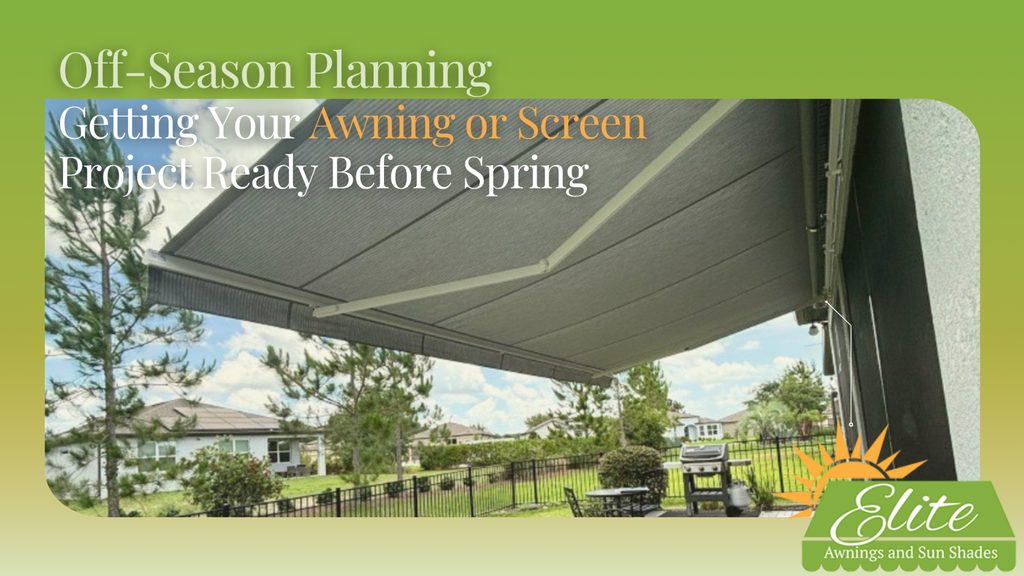
A patio or porch project has a shape to it: a conversation, a measurement, a fabric choice, a build, an install. None of that shape actually requires warm weather. The only part of the process that needs a warm day is the first afternoon you sit under the finished awning or screen — and that’s the one thing off-season planning is built to protect.
If you’ve been thinking about a retractable awning or a set of motorized screens for next year, the months before spring are simply when the early steps happen. Here’s what that looks like in practice, and how to use this stretch of the calendar well.
What off-season planning actually means
A Sunesta awning or screen isn’t pulled off a shelf. Every unit is custom-built to the inch for your home, with awnings sized up to 40 feet wide and 14 feet 8 inches of projection, and Sunesta Sentry screens up to 18 feet wide and 12 feet tall. That custom build is exactly why the early steps matter more than the calendar does.
In order, a project generally moves through four stages:
- A free in-home estimate. We come to you, measure the space, and talk through what you’re trying to solve — shade over a patio, privacy on a porch, or both. No pressure, no obligation.
- Choosing fabric and frame color. More on this below — it’s worth taking your time with, and off-season gives you that time.
- The build. Typical manufacturing time is 14 days from order, since every unit is made to your measurements rather than pulled from stock.
- Installation, scheduled once the unit is ready and delivered.
None of those four stages needs summer weather to happen. If anything, the first two are easier without it — an empty patio in February shows you things a furnished one in July doesn’t, and a quiet week in your own schedule is a better time to sit down and compare fabric swatches than a busy Saturday in June.
What the free in-home estimate actually involves
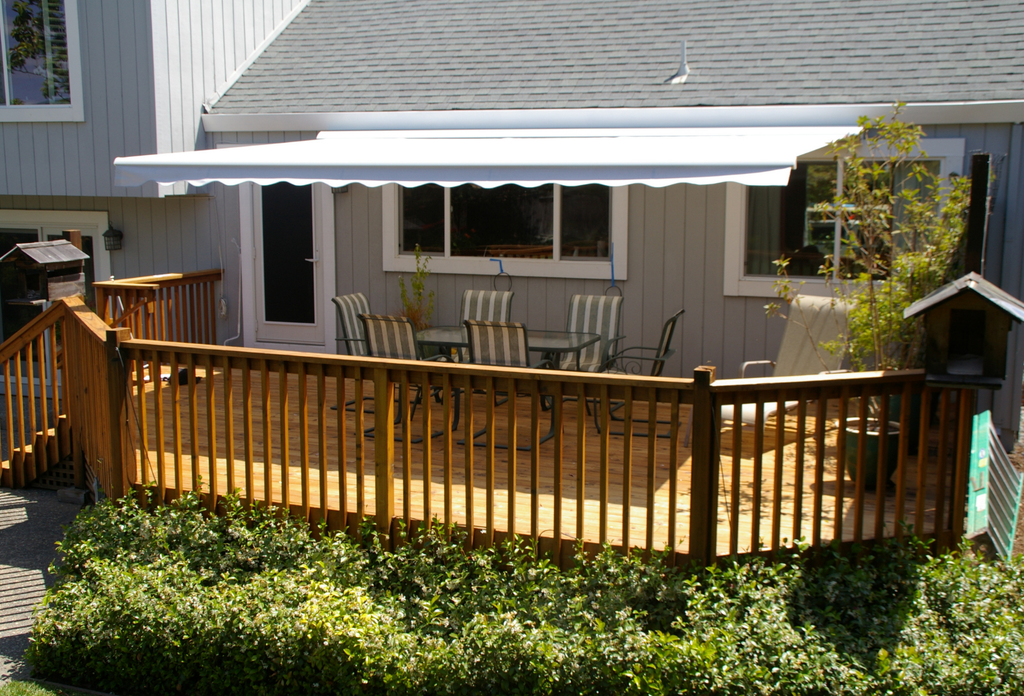
It’s worth knowing what that first visit looks like, since it’s the step that starts everything else. We come to your home, walk the space with you, and take real measurements — not estimates from a photo or a phone call. If you’re weighing an awning against motorized screens, or trying to decide whether you want coverage over the whole patio or just part of it, that’s the conversation to have in person, standing in the actual space.
There’s no cost and no obligation attached to the visit. You’ll walk away with real numbers — what a unit would cost for your specific space, what sizes are possible, and what the timeline looks like from there. Whether you order that day, the next month, or just file the information away for later is entirely up to you.
Winter is when your space tells you the truth
With the furniture put away and the leaves down, you can actually see the patio or porch you’re working with. Where does the afternoon glare land? Which door does everyone actually use? Is the goal to open the space up, or to close it in from the road and the neighbors?
Those questions are most of the design decision, and they’re easier to answer when the space is stripped down to its bones. A bare deck in January shows you the sightlines, the traffic patterns, and the parts of the house that catch sun or wind, without a table umbrella or a row of planters in the way to distract from it.
Sometimes the answers point toward a retractable awning over the whole patio. Sometimes they point toward motorized screens on a porch you’d rather close off from bugs, wind, or a low winter sun. Often the answer is a bit of both, on different sides of the house — an awning over the main patio and screens on a side porch that catches the wind.
Awning or motorized screen — how to tell which one you need
Both products solve a version of the same problem — an outdoor space that’s hard to use for part of the year — but they solve it differently, and most homeowners land on one or the other once they see the comparison laid out.
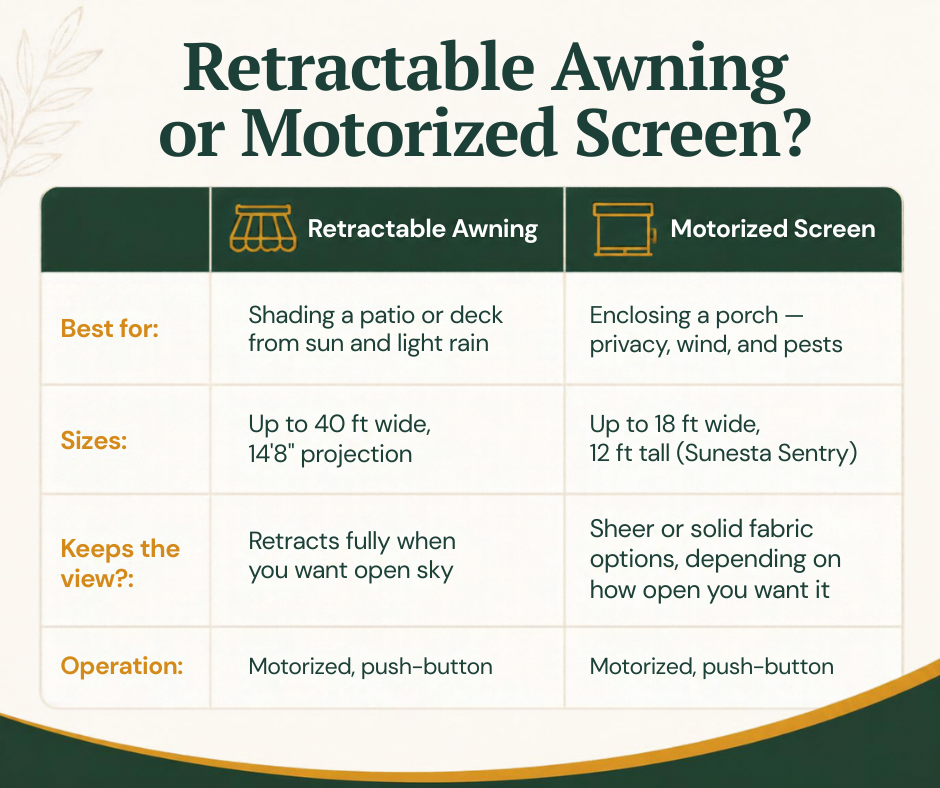
If your patio is mostly about sun and rain — a spot that’s unusable by two in the afternoon because of glare and heat — an awning is usually the answer. If the bigger problem is bugs, wind, or wanting a more private, enclosed feel on a porch, motorized screens tend to fit better. And if you’re not sure which describes your space, that’s a completely normal place to start. It’s exactly what the in-home estimate is for — we’ll look at the space with you and talk through which one actually solves your problem, rather than guessing from a general description.
The part everyone enjoys more than they expect: fabric and color
Choosing fabric is the best part of this whole process, and off-season is a genuinely good time to do it properly. There are 100+ fabric options and 4 frame colors to work with, and instead of a rushed afternoon squeezed between other summer plans, you get to spread the swatches across the kitchen table, hold them up against your siding in real daylight, sit with a couple of favorites for a few days, and change your mind if you want to.
This isn’t a small decision — the fabric and frame you choose are on the front of your house for years, so it’s worth treating it like one. Some homeowners want something that disappears into the existing brick or siding. Others want a striped pattern that makes the whole back of the house look intentional. Either direction works; the point is having the time to actually decide rather than picking quickly under pressure.
Sunesta’s designer fabrics are made as recommended by the Skin Cancer Foundation, so the UV protection is built in no matter which color wins. You can browse the fabric and screen options any time, before you ever pick up the phone.
What to do with the awning or screens you already have
Planning ahead isn’t only for a first project. If you already own a Sunesta awning or screen, the off-season is also the right time to think about how it’s protected through the cold months. Two enclosure options cover the fabric and motor:
- Hood — partial fabric protection.
- SmartCase — total fabric protection, and the more complete option if the unit will sit retracted for months at a time.
Either way, there’s nothing to take down for the winter. The unit stays exactly where it is, protected, and ready to extend again the first time you want it — no annual removal and reinstall, no storage problem to solve.
If you’re an existing customer thinking about a second unit — screens for a porch to go with an awning you already have, or an awning for a different side of the house — the same off-season timeline applies. The estimate, the fabric decision, and the build work the same way whether it’s your first Sunesta or your third.
Built to hold up to more than one winter
Whatever stage of the process you’re at, it’s worth knowing what you’re actually planning for. Every Sunesta unit is:
- Extruded aluminum frame construction with a 4 cable arm system and high-grade stainless steel hardware — heavier-duty than the cast aluminum and two-cable arms used in lesser quality awnings.
- Built and assembled in Jacksonville, Florida — one plant, start to finish, not shipped in overseas and finished here afterward.
- Backed by a lifetime frame warranty, transferable to the next homeowner, plus a 10-year fabric warranty.
- Approved under the Miami/Dade County Building Code for high velocity winds.
Elite Awnings & Sun Shades has been recognized as a Sunesta Top 10 Dealer in the U.S. and Canada for five consecutive years, along with multiple Sunesta awards for Sales & Customer Service. That recognition tracks how installations actually go over time — which, once the unit is on your house, is the part you actually live with.
None of that is marketing language dressed up for a blog post — it’s the same information you’d get standing in the showroom or on the phone with us, and it’s the information worth having before you compare a Sunesta unit to anything else on the market. A retractable awning or a set of motorized screens is not a seasonal purchase in the way patio furniture is. It’s attached to your house, and the frame warranty is built to outlast the person who bought it, which is exactly why it’s worth getting the early decisions right rather than rushing them.